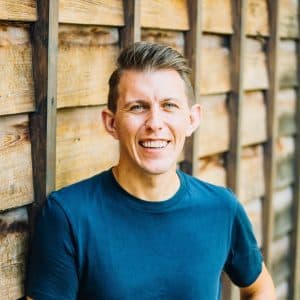
 Writer
Austin, TX & Taiwan
Paul Millerd
Ex-McKinsey consultant who self-published The Pathless Path, turned down $200K from Penguin, and built a $276K/year solo business while living nomadically across 50+ apartments.
The Story
In 2017, Paul Millerd handed back a $24,000 signing bonus to a consulting firm and walked out of the career he'd spent fifteen years building. No next job. No freelance pipeline. No plan at all.
This wasn't some overnight awakening. Paul is a small-town Connecticut kid who ran the full elite playbook — University of Connecticut, then MIT for an MBA and a master's in systems engineering, then GE, then McKinsey, then BCG. Each rung was supposed to feel like progress. Instead, each one felt more hollow than the last. "We've narrowed our conception of life down to something that centres around a job," he says. By 2016, he couldn't ignore it anymore.
So he quit. And then he did something that most people who quit prestigious jobs don't do — he moved to Taiwan with no plan whatsoever. One month after arriving, he met Angie. A year later, they eloped in Taipei.
What followed was seven years of improvisation. Paul and Angie lived across 50+ apartments in Taiwan, Spain, Thailand, Mexico, Portugal, and the US. He scraped by on sporadic consulting and kept costs under $1,000 a month in Taipei. He wrote constantly. He launched an online course called StrategyU, teaching the frameworks he'd learned at McKinsey.
Then in January 2022, he self-published The Pathless Path. It sold 10,000 copies that year. Penguin came calling with a $70,000 offer. He turned it down. Two years later, Portfolio/Penguin came back with a $200,000 two-book deal. He turned that down too.
The math told him to keep his independence. Self-publishing earns him roughly $7 per copy. A traditional deal would pay $1–2. Over 50,000 copies sold, the difference is hundreds of thousands of dollars. But it's not just math. Paul had spent a decade learning what it feels like to hand your life to an institution. He wasn't about to do it again.
By 2025, his cumulative independent income crossed $1 million. He lives between Austin and Taiwan with Angie and their daughter Michelle. He works three days a week. He's taking DJ lessons.
How He Works
Paul works three days a week and spends two full days as the primary parent for Michelle. This isn't aspirational — it's the actual schedule.
His mornings are slow by design. Long walks, no alarms, no inbox-first routine. He treats this like architecture, not luxury. The walks are where the writing comes from.
About a quarter of his working time goes to his weekly newsletter, Pathless, which has 26,000+ subscribers and over 400 issues. Another fifth goes to running StrategyU, his strategy consulting course, which is the main engine of the business. Podcasts and guest appearances eat another chunk — they're his primary way of reaching new people.
He sets aside roughly $20,000 a year for pure experiments. DJ lessons. YouTube. Hosting events. Things that might go nowhere. He doesn't call this a budget line — he calls it the cost of staying curious.
His community runs on a pay-what-feels-right model, minimum $75. No aggressive funnels. No high-ticket upsells. "Above a certain level, which is pretty low for me and my wife, how do we enable the life we want to live versus how do we acquire as much as possible."
How He Earns
Paul makes about $23,000 a month — roughly $276,000 annualised. Here's what's interesting about where that comes from.
The course is king. StrategyU and corporate training workshops account for 61% of revenue. This is the thing he'd never have predicted when he left McKinsey — that teaching strategy consulting would be more lucrative than doing strategy consulting.
Book royalties make up 22%, or $300,000+ total across roughly 50,000 copies of The Pathless Path. Because he self-published, he keeps the lion's share. The Penguin deal he turned down would have paid him a fraction of what he's earned on his own.
Freelance consulting, once his lifeline, has shrunk to about 15% and keeps declining. The rest — newsletter sponsorships, community fees, affiliates — fills in around 10%.
The ceiling is real, though. Without employees, this is roughly as big as it gets. He's chosen that trade deliberately. Hiring would buy growth and cost him the three-day workweek and the DJ lessons and the slow mornings. So far, the answer has been no.
The Failures
The glossy version of Paul's story skips seven lean years. From 2017 to roughly 2022, he survived on sub-$1,000-a-month living costs in Taiwan and inconsistent consulting gigs. When he left his firm, he didn't just forgo a salary — he handed back a $24,000 signing bonus and walked away from a $30,000 bonus he could have waited to collect.
The nomadic life came with real costs. A dog bit him in Taiwan. He had a tooth extracted during COVID in Spain with limited medical options. He picked up a parasitic infection in Mexico. These aren't charming travel stories. They're what happens when you have no home base and no employer-provided health insurance.
His second book, Good Work, published in 2024, sells about 150 copies a month. That's fine for most authors. But compared to The Pathless Path, it's a fraction of the momentum. The first book caught a cultural wave — the post-pandemic rethinking of work. The second didn't. Lightning doesn't always strike twice.
And then there's the loneliness problem. "If you're free on a Tuesday, so what, unless you're able to have deep meaningful conversations or connect." Freedom without community is just isolation. It took Paul years of nomadism to figure out that location independence and belonging are in tension. Austin was his answer — the first time he chose a place specifically for the people, not the cost of living or the weather.
Why It Works
Paul turned down every external dependency offered to him — publisher, investors, employer — and it didn't destroy him. That's the structural fact worth understanding.
He owns everything. Both books, self-published. The course, self-hosted. The newsletter, his list. No investor has a board seat. No publisher controls his release schedule. No employer can restructure him out. He runs the entire operation with Angie and occasional contractors.
The low-overhead marriage is the hidden engine. Paul's independence wouldn't work if Angie wanted a different kind of life. She doesn't. She's an author herself — Made in Taiwan, published in 2026 — and shares his orientation toward time freedom over income maximisation. They designed their cost structure together to keep the floor low.
His scenius — the loose network of people who amplified his work — matters more than any marketing strategy. Ali Abdaal endorsed The Pathless Path multiple times in 2022 and drove a wave of readers. Venkatesh Rao of Ribbonfarm pushed meaningful book sales. The Yak Collective, a loose network of indie consultants, gave him peers. David Whyte, the poet, gave him the phrase "pathless path" itself.
The deepest advantage is that his achiever instincts didn't die — he redirected them. Paul writes openly about how the McKinsey-trained part of his brain still fires. He still wants to win. He just defined winning differently: three-day workweek, present father, books that belong to him, enough money, and the freedom to take DJ lessons on a Wednesday.